
Guides
How to start a business with AI
A step-by-step guide to going from a business idea to your first customer, and how AI can help along the way.

More people are starting businesses now than ever before. In 2025, Americans filed 5.67M new business applications, and nearly three-quarters of them were solopreneurs who do not intend to hire a team.
AI is making it easier than ever to get started with a new business idea, but some parts of starting a business are still just as hard (if not harder!) as they’ve always been.
This guide is meant to help walk you through the process of going from idea to business, so you can get started setting up your first business.
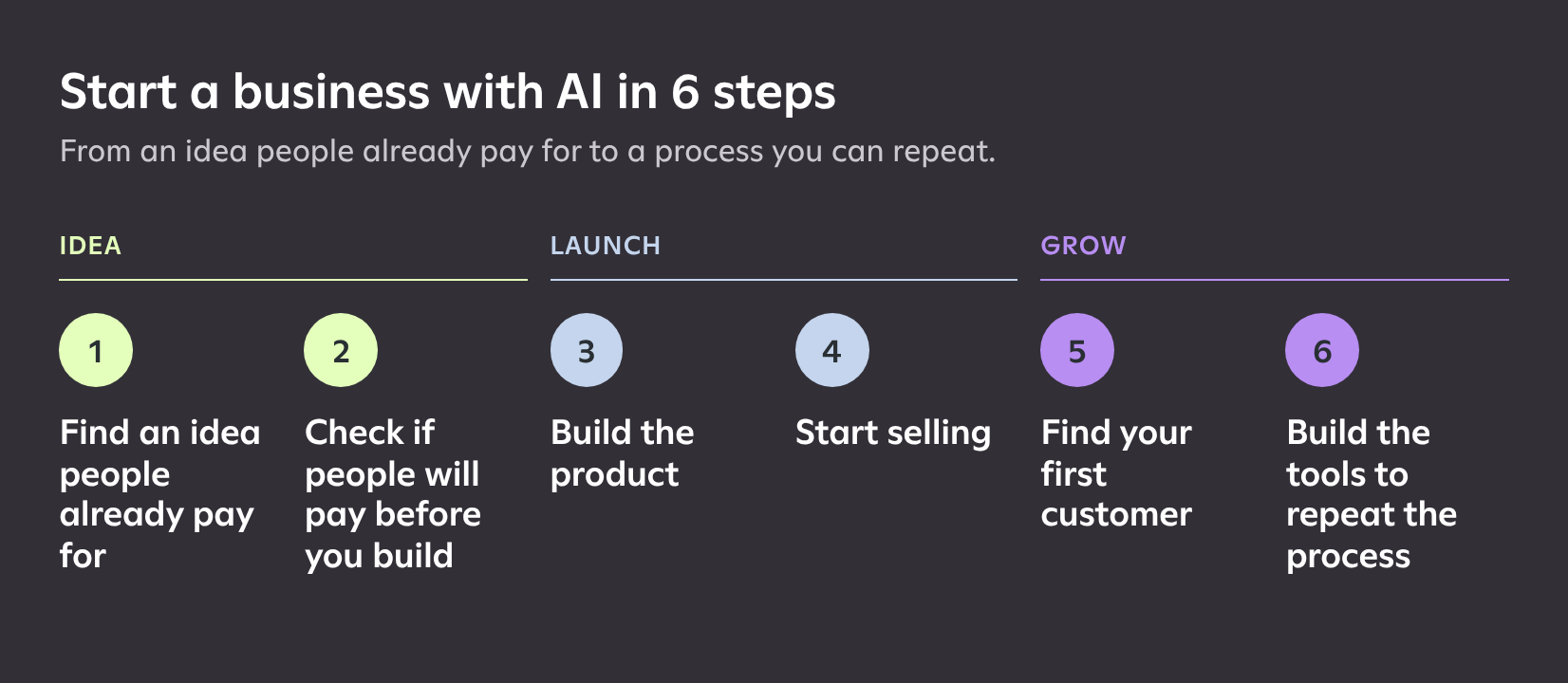
Start a business with AI in 6 steps
Starting a business is hard, but fundamentally it comes down to building something, selling it, and then repeating that process to grow.
It may sound too simple to break entrepreneurship down into a few “steps,” but if you can truly follow through this 6-step process, you will be up and running with a “real” business.
- Find an idea people already pay for
- Check if people will pay before you build
- Build the product
- Start selling
- Find your first customer
- Build the tools to repeat the process
Step 1: Find an idea people already pay for
If you’re starting a new business, the easiest way to get started is to pick an idea that you know people already pay for. You don’t need to be the next Albert Einstein and come up with a “genius” idea when you are just getting off the ground. In fact, it’s normally better to start with an idea that you already know people pay for.
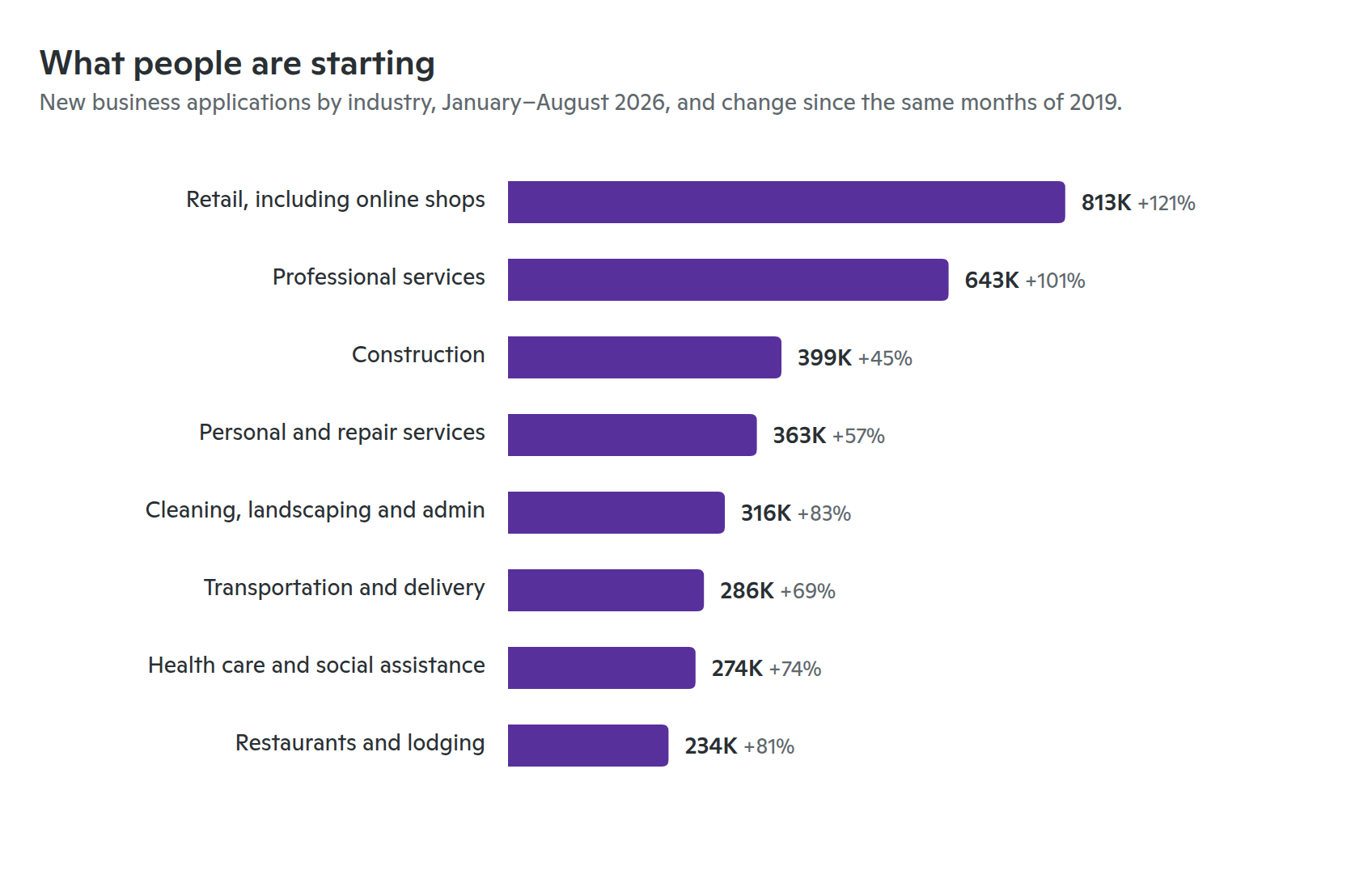
In 2026, some of the most popular types of new businesses are (1) online stores, (2) professional services like consulting, design, marketing, and bookkeeping, and (3) local services like cleaning, landscaping, and pet care.
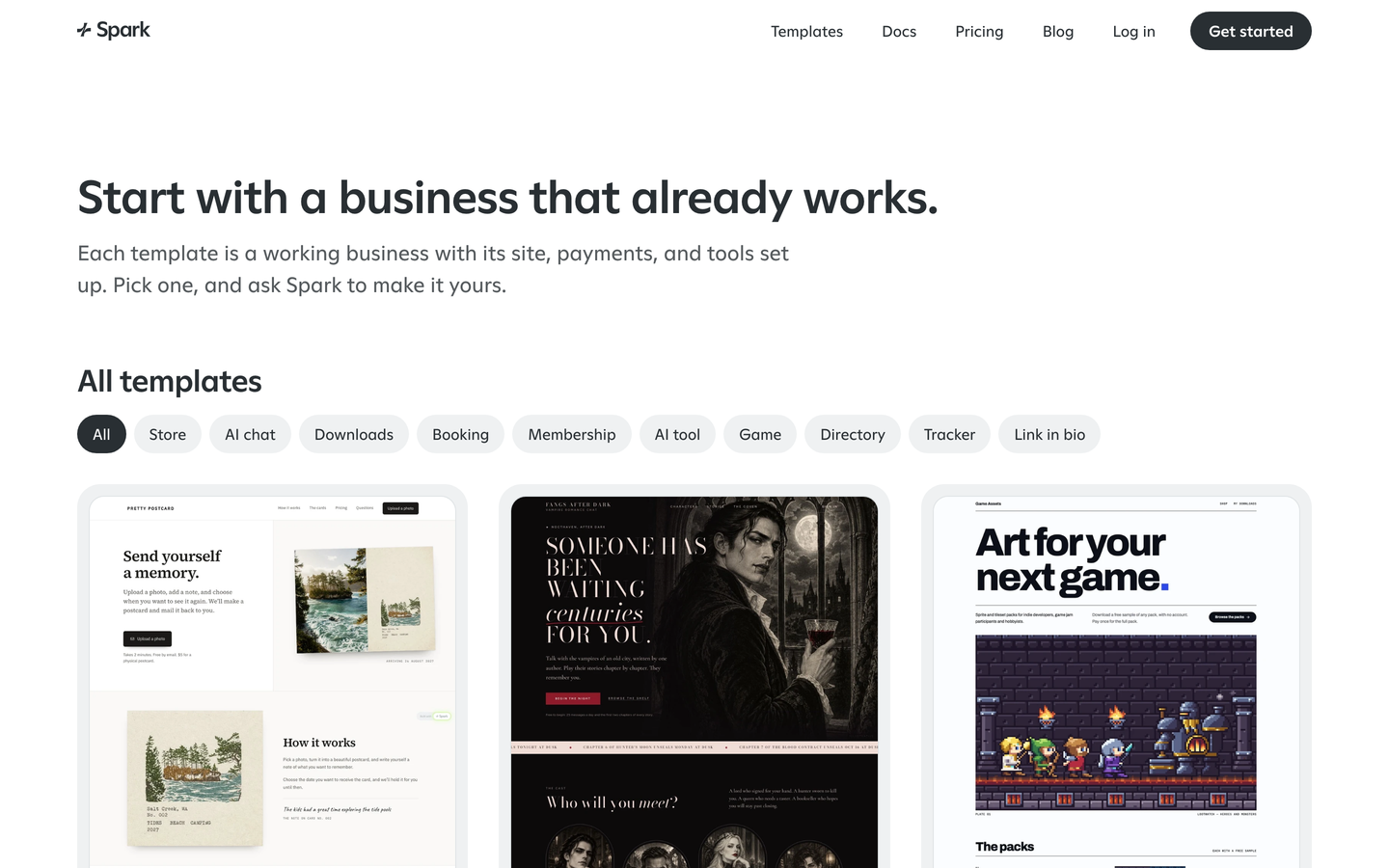
Here are some examples of these businesses (and other great starting points) from the Spark business templates: real businesses built on Spark that you can start from for free and make your own.
Of course, the best business ideas are the ones where you have a unique advantage. Maybe you have a day job that gives you a lot of expertise in a specific skill. Maybe you have a social media audience that is interested in a certain topic. Maybe you know the ins and outs of a specific process and could build better software for it. Or maybe you already know a group of people who would be your first customers.
My recommendation is to look at a list of good business ideas and then figure out if you have a personal spin on any of them that would give you a unique product and/or marketing advantage.
Step 2: Check if people will pay before you build
One benefit of starting a business where you already know that people pay for the product is that someone else has already validated the idea in some way.
For example, I know that people pay for email newsletters about investing in the stock market. If that’s a big market, and I also start a paid newsletter about investing, I’d be confident that with enough effort, I should be able to get some customers to pay for my product, too.
Nevertheless, it’s always a good idea to spend time validating your idea before you start building. Here are some validation exercises I would recommend:
- Ask yourself if you would pay for this product (and how much)
- Ask a prospective customer (who is not a friend or family member) if they would rather have your product or an existing substitute
- Read reviews, comments, and online forums to see what people think about similar products
If you think you are the target audience for a product, and you wouldn’t pay $10 for it, it’s unlikely that someone else would either.
Step 3: Build the product
Building the product is really the fun part these days, especially when using AI tools like Spark.
For most business ideas, you can type your idea into Spark, and it will build a fully functioning product in 5-10 minutes, with hosting, customer accounts, and payments already built in, publicly available at a custom spark.site domain.
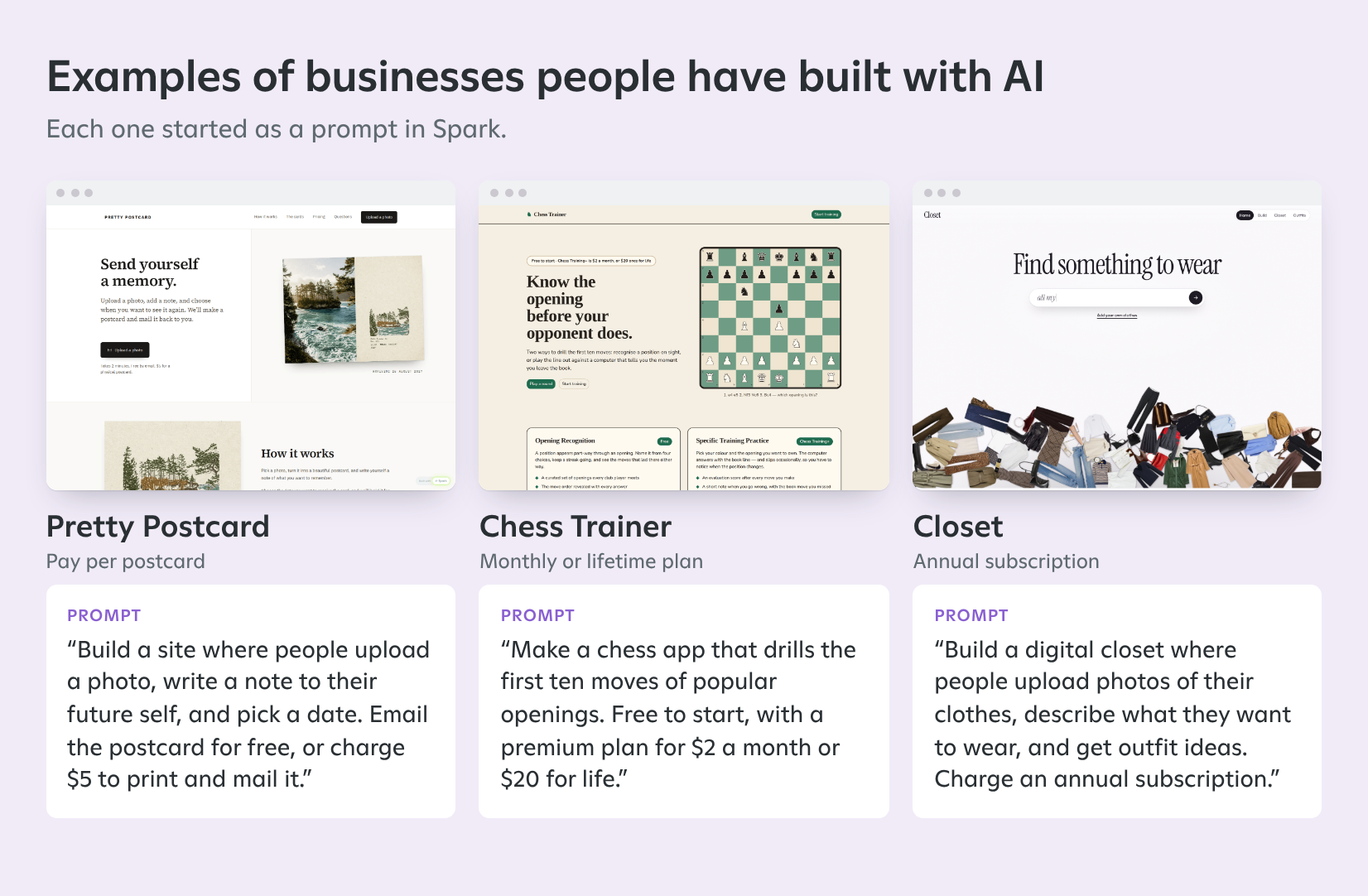
If you have not used AI to build websites or apps before, here are some tips on using AI to build the first version of your product:
-
After explaining your idea to the AI, ask it to interview you with clarifying questions to refine and flesh out the idea (Spark naturally does this in the onboarding process)
-
When you’re not sure of what you want, ask the AI to build you a few different variants so that you can choose from a few options
-
Once you’re ‘done,’ ask the AI what you should work on next. For example, try asking the AI to propose a plan for what to do next for marketing, product development, or customer support
After building your initial product, the next step is testing it out. Use it the same way a customer would, figure out where the rough edges are and how you could make the product even better, and then get it ready to launch to your customers.
Don’t worry about making everything perfect before launch though. Just make sure it’s good enough to put in front of your customers, so you can start getting real feedback to improve it.
Step 4: Start selling
The two big differences between “vibe coding” an app and actually turning your product into a business are (1) the ability to sell your product and (2) people who are actually buying your product.
You can’t really have a business until customers can give you money! And while serving free users is great, this guide is about how to turn your idea into an actual business.
Spark makes it easy to set up user accounts, payments, subscriptions, coupon codes, and all of the backend services that make it possible for customers to buy things from you. You just connect your Stripe account and tell Spark what you’re selling and how much it costs.
Step 5: Find your first customer
After making it possible to buy your product, the next thing you need to do is find people who actually want to buy it!
Marketing looks different for every type of business, and it’s important to match the marketing opportunities to the product, the founder, and their existing skills and assets. For example, a local cleaning business might find its first customers through neighborhood groups and word of mouth, while a paid newsletter might grow through social media.
Finding customers is the hardest step in the process in today’s world, but we do have better AI tools than ever to help you out by refining your ideas and creating content. For example, you can have the Spark agent help you think through the best marketing channels for your product, where you can reach your customers, and what the right marketing messages are.
It’s harder to follow through on the marketing steps because there is a much longer feedback loop between making a change and seeing the results, but it’s also the most rewarding step when it works!
Step 6: Build the tools to repeat the process
If you’ve made it this far, congratulations - finding your first customer and making your first sale is an incredible feeling!
Once you find your first customer(s), it’s time to ask yourself: How could you repeat this process? How did your customer find you? Why did they choose your solution? How did they decide to purchase? Now that you have some information, it’s time to optimize so you can repeat the same process again and again.
At this point, you’ll want to add analytics to your site and product so you can understand where your customers came from, how they use your product, and what made them want to buy.
You’ll probably also want to automate the marketing that helped you find this customer. And you may need additional tools to manage your orders and serve your customers.
An AI business builder like Spark can help with all of these steps, from building new tools, to managing your marketing plans and customer orders.
How AI can help you run your business
AI is an incredible partner for starting new businesses. The magic is finding the right balance, where you bring your experience and insights, and the AI helps you execute on the vision and run with your plans.
AI is great for getting started, and it’s also great for the ongoing work of running a business: answering customer emails, writing marketing content, updating your website, and turning your results into a plan for next week.
The thing it still needs from you is direction, and the judgment to pick the best choice among several options.
Business ideas you can start with AI
Here are some business ideas that people already pay for and that are a great fit for building with AI:
- Online store - Sell products you make, curate, or source
- Consulting or freelance services - Design, marketing, bookkeeping, or another skill from your day job
- Local service business - Cleaning, landscaping, pet care, pressure washing, with a website that takes bookings and payments
- Paid newsletter or membership - Share your expertise with a paid newsletter or community
- Online course or tutoring - Teach a skill, with video lessons or other types of courses behind a paywall
- Niche software - A simple tool that solves a problem you’ve seen at work
What AI won’t do for you
AI can do a lot, but there are still a few things you need to do yourself:
- Pick the right idea - AI can brainstorm a hundred ideas, but it doesn’t know which one you have an advantage in
- Talk to customers - The best way to learn what people will pay for is still to ask them
- Exercise judgment - AI can lay out your options, but you still have to make the important decisions of what to spend time on and what to focus on
- Check its work - AI makes mistakes, so test your product and read what it writes before your customers do
FAQs
Can you start a business using AI?
Yes. You can use AI tools like ChatGPT, Claude, and Spark to come up with ideas, build your product, set up payments, and plan your marketing.
How can I make money using AI?
The most reliable way to make money using AI is to build and run a business. AI makes it faster and cheaper to build businesses today, and the best place to start is with an idea people already pay for. See Step 1 to find yours.
How much money do you need to start a business with AI?
None. There are many different AI tools, and many are free! On Spark, you can build and publish your first project for free, with no credit card. You only pay when you want to take payments or use your own domain.
What is the best AI for a small business or startup?
Chatbots like ChatGPT, Claude, and Gemini are great for brainstorming, research, and writing. To build and run the business itself, a tool like Spark gives you your website, customer accounts, payments, and marketing in one place.
What are the best free AI tools for building a business with AI?
AI tools like ChatGPT, Claude, and Gemini all have free plans that can help you get started building a business with AI. Spark is a specialized tool to help people build businesses with AI, and it’s free to build and preview your first project.
How do I write a business plan with AI?
Give an AI your idea, your target customer, your advantage, and your budget, and ask it to draft each section of the plan. Then ask it to interview you to fill in the gaps of the plan.
What business can I start with AI?
AI can help you set up many types of businesses that sell online, like online stores, consulting, local services, newsletters, and courses. It can also help you set up the digital presence for physical businesses like home services, personal training, and consulting.
Conclusion
Starting a business has never been easier, but it’s still incredibly hard to get a business off the ground.
While AI can take a lot of the work off your plate, building the right product, writing the right marketing message, and talking to customers is what really shapes the idea – and results in success.
If you have an idea you’ve been thinking about, now is a great time to try it out. Build your first Spark site and see where it takes you.